
By Elham Monfaredi
In the Shadow of the Holocaust: Short Fiction by Jewish Writers from the Soviet Union, translated by UW’s Sasha Senderovich and Harriet Murav, is a forthcoming collection of ten stories originally written in Yiddish and Russian, scheduled for publication by Stanford University Press in February 2026. These works recover voices that had been scarcely known or translated, with particular emphasis on women writers who lived through the Holocaust in Soviet territory.
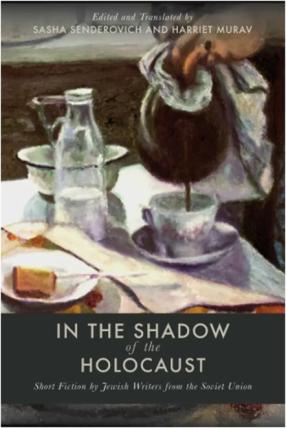
The authors—coming from Ukraine, Lithuania, Russia, and Belarus—tell stories of ordinary lives profoundly shaped by loss, exploring memory, conflict, love, and resilience. As Senderovich and Murav write in their introduction, “The authors we translate explore fundamental questions about the Holocaust and other mass killings and genocides of the past and present […]: how to provide testimony, how to memorialize victims, and how to live in the face of overwhelming destruction.” These narratives go beyond accounts of death and suffering, showing how individuals and communities navigated the long, uneven aftermath of genocide, finding ways to survive, remember, and make meaning. Translating these works not only recovers lost voices but also opens new perspectives on Holocaust literature, Soviet Jewish history, and the enduring impact of mass violence.
While the collection focuses on historical events, its significance extends urgently to the present. As thousands of Iranians are being brutally killed by the Islamic Republic in their fight for freedom, these stories take on even more immediate relevance. They remind us that even in the face of overwhelming violence, human voices persist, and storytelling becomes a vital act of remembrance, witness, and resilience. Bringing these histories to light is not only an act of scholarship but also a moral imperative, showing how literature can illuminate survival, memory, and ethical responsibility across generations.
By reading and reflecting on these stories, we can better understand the courage, suffering, and resistance of those who endured past atrocities—and recognize the echoes of their struggles in the present. In the Shadow of the Holocaust invites us to bear witness, honor memory, and confront the ongoing realities of oppression with empathy and awareness.