
By Kathryn Medill
This year is an exciting one for graduate study in the MELC Department. Our department has had a masters program for many years; now, the Near and Middle Eastern Studies Interdisciplinary Ph.D, which has long been housed in the UW Graduate School, has moved into the MELC Department. The MELC faculty is excited to be able to work more closely with NMES students, and we hope that this move will help the doctoral students to more easily access the department’s resources.
The Middle Eastern Languages and Cultures M.A.
The M.A. in MELC is a two- to three-year program that allows students to learn the Middle Eastern, Central Asian, or Horn-of-African languages that they need in order to pursue their careers in academia, business, and international relations. They can explore any of our department’s specialties—from the ancient Middle East and Hebrew Bible; to Jewish and Islamic histories; to the cultures of Persian, Turkic, Arabic, and other peoples of Western and Central Asia and the Horn of Africa. Students also gain professional skills by acting as teaching assistants, instructors, or research assistants.
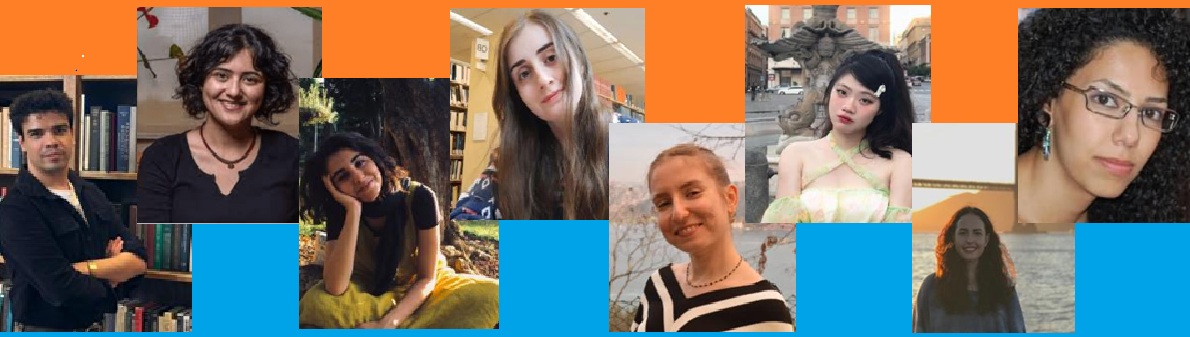
Masters students contribute to conversations in Middle Eastern Studies through their research. For example, in his thesis “Glimpsing the Divine through the Mundane: Constructing an Ottoman Framework for the Sixteenth-Century Teshuvah and Fetvâ,” Elyakim Suissa (M.A. 2024) demonstrated how Ottoman Jewish and Islamic law developed together and exchanged ideas. Forrest Martin (M.A. 2023) examined texts in four ancient languages, showing that cultures across the ancient Middle East feared the disruption of their world. Minsoo Jeon (M.A. 2022) showed how a medieval history of the Anatolian Seljuks that was translated from Persian into Turkic challenged the Persian history-writing tradition. Brianna Vos (M.A. 2025) has been an instrumental part of the Svoboda Diaries Project, whose website is here (link: Svoboda Diaries Project – Svoboda Diaries Project).
Recent masters students pursuing careers in academia have had a strong history of placement in Ph.D. programs—not only the University of Washington’s own NMES and Jackson School of International Studies Middle East programs, but also those at Johns Hopkins University, Emory University, the University of Pennsylvania, and Indiana University Bloomington, among others.
The Near and Middle Eastern Studies Interdisciplinary Ph.D.
Although the Near and Middle Eastern Studies Ph.D. program has only recently moved into MELC, it has been part of the graduate landscape at UW for decades. The current head of NMES, Liora Halperin, is excited about the future of the program. She writes,
“The NMES program was founded in 1991 as a way of bringing together scholars focused on the Middle East, across a range of UW departments, to accept and train Ph.D. students. After spending its first decades within the UW Graduate School, the program moved into a new administrative home in the MELC department in Fall 2025, but it retains its interdepartmental faculty, autonomy, and commitments to educating students across traditional disciplinary divisions. NMES students serve as TAs in multiple units, from MELC, to History, to LSJ, the Jackson School, Slavic, and beyond, and they are connected to graduate student communities across multiple programs and departments. Our many graduates have gone on to influential careers in academia, government, and the corporate and non-profit worlds.
“At a time of surging student and public interest in the Middle East region, the NMES program and the expertise it cultivates about the histories, literatures, societies, and politics of the region remains a core part of intellectual life on our campus. We look forward to many years ahead in our new home in MELC.”
The NMES program’s strength is its interdisciplinary nature. Students learn to view the Middle East through the lenses of history, political science, comparative religion, global literature, public health, translation studies, and more.
Like the students in the masters program, the students in NMES have been conducting research important to the scholarly community. Corinna Nichols (Ph.D. 2025) won the Graduate School’s competitive ProQuest Distinguished Dissertation Award for her dissertation, “Entangled Identity: Control and Depictions of Hair in the Ancient Near East.” Melinda Cohoon (Ph.D. 2025) explored how gaming culture could become a site of political resistance in “Affective Lifeworlds: Iranian Gamers vs. the Islamic Republic of Iran.” Older projects can be found on the UW Libraries ResearchWorks website (link: Near and Middle Eastern Studies). Take a look at their amazing work!